Posted on

Natural Health Worldwide: Changing healthcare for good

Natural Health Worldwide: Changing healthcare for good

The author of Prevent & Cure Diabetes announces the launch of an innovative patient-centred portal – Natural Health Worldwide

The connectivity of the internet has given opportunities for ‘disruption’ of traditional business models in many fields with which we are now familiar – taxis, room rental, publishing, information retrieval, to name but a few. Now there is an opportunity also to rethink health care – how we access diagnosis, treatment and expert advice.

Natural Health Worldwide (NHW) is a new website that launched on 1 June, this year. It is a portal which connects patients from all round the World with NHW health practitioners. These practitioners, also from all round the World, can be Medical Doctors, other qualified Health Professionals or Experienced Patients. Each practitioner has an individual webpage where they can describe their qualifications, their experience and what they specialise in. Patients can search the site by type of practitioner and or illness/problem.

Appointments are booked through the website and can be conducted by Skype, FaceTime, ‘phone or email. This makes the process very convenient and also caters to a forgotten patient population – the housebound and bedridden. After each appointment, patients rate their practitioners on ‘Knowledge’, ‘Value for Money’ and ‘Approachability’, as well as having the opportunity to leave more discursive comments. The rating system means that practitioners build reputations and this will help inform subsequent patients as to who may be the best practitioner for them.

Patients can also access lab tests via the site and there is also an extensive phlebotomists’ listing in the UK (to begin with) if blood samples are needed, again making the process quick, easy and accessible to all.

NHW has a philosophy of providing healthcare that is as ‘natural’ as possible, with many of the practitioners using diet, supplementation and other non-prescription drug approaches. However, this does not exclude the use of prescription drugs, where appropriate. Initially the focus of the site is on conditions such as ME/CFS, Adrenal and Thyroid problems, Lyme Disease etc. However, NHW expects to widen its coverage as the site grows.

Dr Sarah Myhill, my co-author and author of Sustainable Medicine and Diagnosis and Treatment of CFS/ME (second edition) is the website founder and has funded its development – this website is her gift to patients. Dr Myhill stands to gain nothing from NHW, having divested herself of all financial interests.

The motivation for this project can be seen from two perspectives. First, over the years, Dr Myhill has had to turn away thousands of patients and wanted to develop a portal that would provide an excellent and accessible service for these often neglected and ignored people. NHW does just that, bringing practitioners to those patients in an easy one-stop shop.

Secondly, NHW is part of a wider agenda, which has the aim of empowering patients to take control of their own health-care. So much of modern medicine can be driven by vested financial interests and in the process, the patient is almost completely forgotten. Dr Myhill had the vision of swinging the pendulum back in favour of the patient and away from those vested interests.

To achieve this empowerment, three key areas were identified:

  1. The knowledge to work out why you have symptoms and disease – Dr Myhill has undertaken an extensive book-writing exercise, with 3 books published already and 2 more on the way this year*
  2. Direct access to relevant medical tests – this is achieved via the NHW website
  3. Direct access to knowledgeable Health Practitioners who can further advise and guide patients, together with access to safe and effective remedies – this is achieved via the NHW website

The hope is that NHW will contribute to the future of healthcare being more patient-centred, with access to health practitioners, lab tests, and the necessary knowledge, all putting patients back in control and giving them the choices that they both need and deserve.

This post was written by Craig Robinson. Craig first met Sarah in 2001, as a patient for the treatment of his CFS, and since then they have developed a professional working relationship, where he helps with the maintenance of www.drmyhill.co.uk, the moderating of Dr Myhill’s Facebook groups and other ad hoc projects, as well as with the editing and writing of her books.


Interested patients – please register at – https://naturalhealthworldwide.com/patient_sign_up.php All patients who register in June or July will be entered into a free mystery prize draw.

Interested practitioners – please register at – https://naturalhealthworldwide.com/practitioner_sign_up.php

Other media and general enquiries – please email office@naturalhealthworldwide.com


*Dr Myhill has published:

Due out this year are

  • The Paleo Ketogenic Diet – getting the best of both worlds – [co-authored with Craig Robinson]
  • Life is an Arms Race – fighting infections – [co-authored with Craig Robinson]
Posted on

Dignity in Care

My mission to promote better care begins

Not all care services and nursing homes have a training budget or, if they do, it may be very limited. In an attempt to raise standards in older people’s services I offered some free training on ‘Dignity in Care’ and ‘Care Quality Commission Essential Standards on Quality and Safety requirements’. Both courses were snapped up quickly by some services. I wish I could have offered more.

Every morning waking up was as painful as the previous mornings had been, especially when I searched my brain to see what I was doing that day. I cried. I felt raw, still suffering after the loss of Mum and Aunty Ann.

That day I was delivering a training session on Dignity in Care to staff who supported older people. I had a large group of 20. Usually I teach up to 14, but I guessed that as it was a free course, the manager had put in as many as she could.

The staff came from a variety of cultures and were very knowledgeable. They shared their knowledge on which cultures liked different foods and liked to be washed/bathed differently and those who needed support to have prayer time.

I was pleasantly surprised when two staff members shared their stories on how and why they had had to report staff who had abused some individuals they were supposed to be supporting. They kept the details confidential and did not give any names of the individuals who had been abused or staff involved, but it was clear that some staff had been suspended on full pay whilst investigations had taken place.

I had the utmost respect for these two people for reporting their concerns. It couldn’t have been easy with the individuals concerned being part of their team, but they had done it for the welfare of the people they were looking after. These two staff members wanted and needed to talk about it and I gave them the opportunity in the break times to do this on a one-to-one basis with me. Before they started talking I told them that I was bound by confidentiality but also duty of care and would have to report anything I had concerns about. Confidentiality has to be breached if a vulnerable person is at risk of abuse or harm.

Back in the training session, the staff members were very much aware of their ‘duty of care’. They understood that all professionals have a duty of care to the people they support and that they needed to ensure that the individuals they supported did not suffer any unreasonable harm or loss. Some, however, found the issue of choice difficult to work with and understand. Many people, whether they have a learning disability, or are older, or have dementia, may need support to make informed choices, and this includes informed choices about risks. People receiving care must be supported and, with the aid of a risk assessment, enabled to fulfil their dreams, needs and wishes.

On my ‘Dignity in Care’ course I wouldn’t usually cover manual handling and hoisting, but since my late mother’s ‘accident’ with the hoist, I had been asking questions about hoisting at every opportunity I got. I asked about the law, the Health and Safety Act 1974 and, in particular, the Manual Handling Operations Regulations 1992. These are regulations that staff need to adhere to. Each individual requiring manual handling should be risk assessed and it will be stated on the risk assessment and in the individual’s care plan how s/he is to be moved, what equipment should be used and how many staff should be involved in the manoeuvre.

All was going well until I asked this question: ‘Do you always use two staff if it says two staff?’ Many said ‘Yes’, but one staff member said, ‘No, not always.’

I could feel anger brewing up inside and I wasn’t sure if it was because of her biased attitude or because of what had happened to Mum. (Probably both!) I pointed out the dangers, but she responded, ‘I’ve done it loads of times and no one’s been hurt.’ I finished this subject by reiterating what they should do and informed the Manager during the tea break that this member of staff needed to understand what was meant by safe practice and why it mattered.

This blog is taken from Suzan Collins’ moving personal story of fighting for justice in elderly care, Beyond My Control.

If this story has affected you or you want to share your stories of dignity in care tweet us and join the #carersweek conversation.

Posted on

Understanding a brain with dementia

How the brain works, a very logical and straightforward article produced by Alzheimer’s Australia, gives a clear and basic introduction to the brain dysfunction involved in dementia and always helps me to picture what is going on inside of the head of someone affected by this disease. The article explains that the brain can be thought of as a factory and that the factory runs at peak efficiency when all the parts are working.

At the front of this factory (the frontal lobes) are the directors. They make plans for the factory and decide on who is going to do what and when. As things get underway they get feedback or other information as to how well things are going and they make judgements on what looks good and what does not look so good. Then they make further decisions, to change that or to keep this, and show their appreciation and annoyance. Planning, organising, judging, decision-making and appreciation therefore take place at the front of the brain.

In the middle of the factory (the parietal association cortex) are the managers. Each manager runs his/her own department. The left side is the talking side: there is a speech department that moves the throat, tongue and lip muscles, a language department that is responsible for finding the words you want and knowing the words’ meaning, a music department, and various other departments. The right side is the picture side, with a motor department that helps you find your way around a building, knows where you are when you are driving a car, puts your arm through the sleeve of your coat, and so on.

The directors pass their plans on to the managers, and the managers make sure the directors’ plans are carried out. In order to do this, directors and managers communicate freely with one another, sending messages back and forth.

At the bottom of the factory (the limbic region, amygdala and basal ganglia) are the workers. They do not know what the directors’ plans are, but they know their job and they do that same job day in, day out. They take care of things like appetite control, the need for water, staying alert and awake or going to sleep, as well as basic emotions, such as turning on tears, making the face red and increasing the pulse rate.

When brain damage occurs, basically someone gets sacked. It can be the director, a manager or a worker, depending on where the damage takes place. Someone can also go on temporary leave of absence – for example, when there is a temporary swelling or loss of blood supply in the brain that is reversed in a short time.

The result of any injury, whether permanent or temporary, is that the efficiency of the factory is reduced. Messages are sent but are not picked up. Directors get annoyed. The managers get tired and the emotional workers get overwrought. Confusion reigns.

Understanding who has been fired and who is still on the job can help in interpreting the behaviour of people living with dementia.

This blog is taken from The Dementia Whisperer: Scenes from the frontline of caring by Agnes B Juhasz.

Posted on

10 Ways to Colour Your Pregnancy Journey with Love

Midwife Bridget Sheeran has just released her first adult colouring book for pregnant mums. To help you get the most out of the book we’ve put together these ten top tips for using the book on your pregnancy journey.

  1. Notice and enjoy the touch of the book in activity! The good quality paper, colourful & unique hard cover design. Press the double page images flat in the centre of the page – no need to worry about felt pens seeping through; coffee spills on the cover; children pulling and tearing the cover or pictures of real life birth of other women’s shapes, colour, babies and sizes!
  2. Bridget has made it easy to just go ahead and start. The introduction invites you to consider the book as a handy companion with all the best intentions of a midwife there to put into your bag and to take it anywhere with you on your pregnancy journey.
  3. Look at the posed essential questions at the end of the introduction, and with the wishes of an experienced midwife – go ahead, take the time it takes and find your own answers for this birth. If your ‘brain feels tired’ be inspired by the index at the back explaining each image and take what you need from that, not forgetting to add you own ideas.
  4. Genuine, good intentions from Bridget’s best wishes are there for you from woman to woman, to discover and keep. Turn the pages and indulge with the child-like qualities of learning new things – with colours and fun! This can seriously change your way of engaging with the ‘usual’ approach to childbirth and learning, and bring new skills such as ‘letting go’ and ‘jumping straight in’ – like the beginnings of birth, and positively stepping into the unknown.
  5. Interacting with the images and the positive messages about birth and you, will lead you to discoveries of yourself plus whom is connecting with you right now – today – to help you, as others have been helped before. Busy lives can prevent us from ‘taking stock’ of who we need around us and who we have nearby…use the book to consider what Mother Nature shows us to do, such as to listen within, appreciate who cares and connect with both.
  6. Some days are ‘sloppy-jo’ days for resting and yet there will come a day when you feel great and ready to get up and MOVE – the colouring in of Dancing Mamas the evening before contemplating an exercise class or a walk locally can motivate you take that step, knowing there are friends and fun to be had in this healthy pursuit.
  7. Using the small actions of colouring in – literally at your fingertips, you use what’s called right-brain activity. This benefits you, because not only does it bring a sense of calm to your day, but also it is what Nature herself has prescribed for you – in preparation, as your baby grows and for taking care of yourself while pregnant and for afterwards, mothering the baby.
  8. In your own time, before or during antenatal classes, this book can help you consider your questions through the prompting of Bridget’s words and images. It may make you think differently about what perhaps you can do for yourself in preparation, to use your body well and to get your baby down (and out) however you give birth. You can discover how well designed your body actually is – or find out through specific birth classes what skills you need eg flexibility of your joints or pain coping practices.
  9. Pass on what you notice about yourself and Birth to other children, using this book – have fun conversations about the colouring, nature’s way and your growing family.
  10. Focus on your physical and emotional needs now, and this will help you after the birth, because you will have already found what works for you or what is needed. Your resources do include the people nearest you, and the birth workers (midwives & doulas) to help your birth recovery and for you to become the woman you want to be after the birth.

Buy Preparing for Birth: colouring your pregnancy journey by Bridget Sheeran, and let us know your favourite ways to stay mindful and calm during pregnancy on twitter.

Posted on

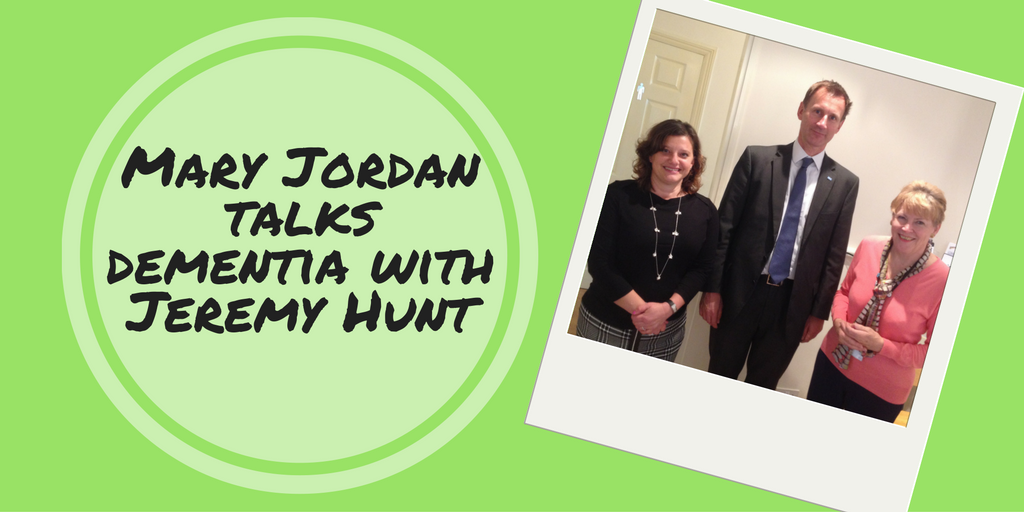
Discussing dementia with Jeremy Hunt, Secretary of State for Health

Since I began working with a national dementia charity nine years ago there have been many improvements to the level of support that people living with dementia (by which I mean both those with a diagnosis and their families and carers) receive. It is now rare for me to meet someone who has struggled for months to get a diagnosis. More GPs are aware of the signs and symptoms and people are more likely to be referred for memory assessment. When I met Jeremy Hunt he explained that he had been campaigning for earlier diagnosis knowing that this can make it easier for people to get the help and support they need. We discussed what still needed to be done for those affected by dementia.

It seems to me that the most important thing now is to get society in general to accept those with dementia and to keep them integrated in the company they know and enjoy. Day centres, Dementia cafés and other specialist services like musical memory groups all serve a useful function and are popular -until recently I ran a very well attended and popular dementia café myself – but our real aim should be to make it possible for people with dementia to continue to go to the social groups, clubs and events which were part of their life before diagnosis.

Some things are already being done. In many places, in Britain there is a huge campaign to make businesses, shops, and public areas ‘dementia friendly’.  The ‘Dementia friends’ campaign by Alzheimer’s Society has also had a big impact in terms of making people generally aware of the difficulties experienced by those with dementia trying to function in everyday life. These are all good initiatives. But acceptance is the key. The above initiatives make people aware of dementia and they may make people more willing to help when they see someone having difficulties but do they make people with dementia more accepted?

Dementia is a problem for all of society but this is still little recognised. Most public places are now ‘accessible’ in terms of physical disability with level paths, ramps for wheeled access, better signage, bigger parking spaces and so on. We should now consider making changes to improve accessibility for those with the cognitive disability. Such changes might include material factors such as better street signs, clear demarcation of different areas and well defined entrances and exits but they should also include the vital human factor. People with dementia need support from other humans. Assistive technology can be helpful in a limited way but social interaction is what slows the slide into helplessness. Just as the public have been educated to recognise the rights and needs of those with a physical disability, so the rights and needs of those with a cognitive disability need now to be addressed in our neighbourhoods and our public places and by all of us in our local communities.

Mary Jordan is an expert in dementia care and works for a national dementia charity. Her books The Essential Carer’s Guide to Dementia and The Essential Guide to Avoiding Dementia offer invaluable insights into the condition and how to care for those with the condition.

Posted on

UK Blog Awards for Health & Social Care

The UK Blog Awards 2016 are now open for nominations, and we’re hugely pleased to announce that Hammersmith Health Books will be sponsoring the Health & Social Care category.

We love the variety and quality of blogs on all aspects of health and caring in the UK, and the UK Blog Awards are a fantastic opportunity to give much needed recognition to the blogs that mean the most to their readers. We’re so excited to be involved!

Nominated blogs pass a public vote round before the final awards are decided by specialist judging panels for each category. This year, our founder and director Georgina Bentliff will be on the Health & Social Care judging panel.

All short listed blogs will gain exposure and reach new audiences, as well as having the chance to connect with more brands.

The UK Blog Awards were created in 2014 to recognise true viral style and creative excellence across 16 UK industries, as well as awarding two sub-categories: Best Storyteller and Most Innovative award. The awards are more than an event, but a digital outreach platform that connects blogs with brands. There will also be Blog of the Year Award, sponsored by Odeon, giving winners from each category the chance to win extra prestige in the blogging community.

We’ve also teamed up with Action PR to co-host a blogger event in London where hopeful award winners can learn more about what the judges will be looking for, and network with brands and other bloggers. There’ll be a selection of our books available for bloggers to take away and read on health issues from chronic fatigue to irritable bowel syndrome, dementia care to vegan food, and everything in between.

If you’d like to follow some of our authors’ blogs check out:

Max Tuck, The Raw Food Scientist, author of Love Your Bones and The Whole Body Solution

Martyn Hooper, Chair of the Pernicious Anaemia Society, author of Pernicious Anaemia – The Forgotten Disease, Living with Pernicious Anaemia, and What You Need to Know About Pernicious Anaemia

Jenna Farmer, A Balanced Belly, book on IBS and IBD coming soon.

Dr Megan Arroll, psychologist and author of Irritable Bowel Syndrome, Navigating Your Way to Health

For more info on the awards and how to enter click here, and browse all our health and social care titles here.

Posted on

Caring for Loved Ones with Alzheimer’s and Dementia

When dementia takes hold you need outside support because, as people get worse, they cannot be left alone for any length of time and the carer needs to share the burden with others.

When it comes to dementia you cannot ‘go it alone’. It doesn’t matter whether you are independent and used to managing your own affairs, that you’re ‘not a sociable person’ or are used to ‘keeping yourselves to yourselves’. You as a couple (carer and person with dementia) may pride yourselves on one, any, or all of these virtues, but it is important once dementia strikes that you re-think your attitudes.

Why do you need a support team?

A person who has dementia can NOT live alone successfully, and in a perfect world we would never expect them to do so. ‘Care packages’ that involve carers calling in once, twice or even three times a day to help someone living alone are only a stop-gap measure. Very good carers who take pride in their work and genuinely care about their clients can make a difference, but they cannot replace the constant watchful presence that is required in all cases except the very early stages of dementia. Sometimes, however, this kind of care is the only and right option at the time and in this case it is important to get the very best care package that you can as long as it is possible to manage this way.

On the other hand, spouses and partners who live with someone who has dementia are put under constant stress as they try to look after them. Living with another person – even when they are in good health – requires constant compromise as we adjust our habits, actions and conversation in the interests of ‘rubbing along together’. Over many years these actions and adjustments become habitual, but they still remain. The most important thing to remember and take note of is that in any social situation all persons are involved in this constant compromise. Of course we can recognise that most partnerships are unequal and that one partner may take more adjustments than the other.

Usually the person who makes more adjustments to the will of another does this willingly. Nevertheless, living with someone involves a constant daily compromise between pleasing ourselves and pleasing another. But people who have dementia gradually lose their ability to see another person’s point of view – they lose their ability to empathise, to understand the everyday compromises that kept the partnership going. The partner who is the carer is left making all the compromises – possibly without even the satisfaction of a shared sense of humour or of togetherness – and certainly without the feelings of support they may have once had from their partner.

This is a burden no one, however loving and dedicated, should carry alone.

If you are a carer in this situation you can build a team to help you.

Who will be on your team?

Your support team can consist of anyone who is prepared to give time and help to you and the person you are caring for: family, friends, neighbours, professional carers, staff in a day centre and support workers from organizations such as the Alzheimer’s Society can all be included.

For more support and guidance on building your team read The Essential Carer’s Guide to Dementia by Mary Jordan, available as paperback and ebook.

This blog was published for World Alzheimer’s Month #RememberMe

Posted on

Longer GP visits will save the NHS money

Both the British Medical Association and Glasgow researchers have reinforced the Society of Medical NLP’s claims that longer sessions for patients visiting a GP will save the NHS money.

In Magic in Practice (London:Hammersmith), the authors, Garner Thomson and Khalid Khan, point out that patients who were allowed to express their “uninterrupted story” to a doctor who was trained to address the context of the complaint as well as the content would dramatically reduce the number of visits required to resolve the issue.

Four GP practices in Glasgow offered  patients with complex chronic conditions (of the kind specifically addressed by Medical NLP) consultations lasting 30 minutes or more. Not only was the condition diagnosed, but personal problems were dealt with and care plan devised and suitable goals negotiated with the patient – similar to the “Ko Mei” format of Medical NLP.

The result was a measurable drop in “negative wellbeing” and a significant increase in quality of life.

The results are published here in the journal BMC Medicine.

The BMA has also called for the rigid 10-minute timetables to be replaced with a more a flexible system enabling doctors to spend more time with patients with more complex needs.

To learn more about Medical NLP read Magic In Practice: Introducing Medical NLP by Garner Thomson with Dr Khalid Khan, and let us know what you think about saving the NHS @HHealthBooks on twitter.

Posted on

Caring for the carer

Being a carer is very stressful and very tiring. It can also be very fulfilling and many of us are glad to be ‘giving something back’, especially if it is to a parent who once cared for us. But there is no denying that it can sometimes feel as though we are labouring under an intolerable burden.

In an ideal world, as our relatives or close friends grow steadily more frail, plans would be made for the future, money saved for contingencies, moves made to more manageable accommodation, and help enlisted in advance. In the real world, people fall ill suddenly, accidents happen and the role of carer is suddenly ours without planning or forethought. If at all possible, time should be made after the initial ‘emergency’ to take a step back, draw breath and consider a ‘care plan’. It is very worthwhile at this stage to get the whole family together and agree co-operation with everyone involved.

Care together and cooperate

Lack of communication and co-operation may turn out to be the biggest underlying problem. Group meetings early on will help avoid resentment or guilt developing. Make use of personal strengths here. For example, someone who is not good at practical personal care may instead be able to manage the financial affairs. Someone who enjoys cooking may agree to keep the freezer stocked with ready meals whilst someone who is only free once a week might organise the shopping.

What if you are the only family member? You should not try to take on everything alone. There may well be neighbours or friends of your relative who will help in the same way that family do. Otherwise you will have to turn to professional help. There is no need to feel guilt over this.

Do not neglect to ask for help from the person you care for’s friends and neighbours if you need it. A neighbour will often promise to ‘keep an eye on things’ but it would be much more useful if you asked them to do something specific – say, ‘Can you call round each morning just to check all is well?’ Of course, people may sometimes be unable to help, but unless and until you ask you will never know. Also investigate local clubs and organisations to which the person you care for belongs. For example, their local church, The British Legion, ex-servicemen and women’s organisations, local branches of organisations set up to benefit ex-members of professions or trades. Local and national charities can also be sources of help.

Care for yourself and get the support you need as a carer

Caring for a member of the family is an unpaid ‘occupation’ but you or the person you care for may be able to claim certain grants and allowances and if you are entitled to them you should certainly claim them. You may not realise that, if you are a carer, you can ask the local authority for an assessment of your own needs. The kind of help and support you can get as a carer includes: respite care to give you a break if you are caring constantly for your relative; emotional support from other carers, usually through a local support group; help with caring; and help with household tasks and activities for the person you care for.

As a carer, it is very important that you look after your own physical and mental health. You should never neglect your own health issues because if you are ill the person you are caring for will suffer as well since you will be unable to give the level of care you would wish to. You should take care of yourself physically by eating properly and taking exercise, but you should also build in some sensible respite. For example, pay for a professional carer once or twice a week. A friend, neighbour or other family member could do this, or even some local charities may provide this service.

There are several organisations aimed at supporting carers. Some of these offer information, some offer practical support and some offer ‘moral support’ in the form of local support groups where carers can meet to talk about their problems or concerns with people who are in a similar situation to them. Many support organisations have carers’ support chatrooms and forums accessed via their website and you may find this kind of ‘virtual’ support most helpful.

Make use of all the resources you can to help you and the person you care for. Read books, check magazine articles, ask at the library, search the internet. Buy or arrange provision of any equipment that will make life easier. Above all, ask what is available. Especially ask your district nursing team. They have access to a lot of information and contacts.

It can be difficult, but try not to allow yourself to feel constantly guilty. Those who we care for do not always show their appreciation, and indeed in some cases, they may be unable to do so. Try always to assure yourself that you are doing the best you can.

At this point it occurs to many carers to think about their own future. It is a very good time to make plans whilst you are caring for another because the difficulties and limitations of frail old age will be clearly before you (as well, perhaps, as the compensations). So, this could be an ideal time to think about your pension and will. You can feel secure in that you have made all the plans you possibly can.

Share this blog for Carer’s Week next week (6-12 June) and help highlight the challenges carers face and recognise the contribution they make to families and communities throughout the UK.

Read more advice and guidance for carer’s from Mary Jordan’s book The Essential Carer’s Guide out now as ebook and paperback.