
Posted on

Rethinking Type 2 diabetes

Type 2 diabetes has always been defined by high blood glucose levels. Most people now think of Type 2 as a lifelong battle against high blood glucose levels, usually beginning with tablet treatment, then more tablets, and finally possibly insulin. After twenty years of basic scientific research and some recent clinical trials, we’re now in a good position to understand what drives Type 2 diabetes, and to start using more logical approaches to the basic abnormalities of the condition – and perhaps to change this standard, and feared, course of diabetes towards ever more treatment.

The real problems lie in the liver and pancreas, the two key organs that process our food after it’s absorbed from the intestine. We know that both these organs have been struggling for ages, perhaps as long as 30 years, before the fasting glucose level peeps above 7 mmol/l, the blood glucose definition of diabetes. They’ve been struggling because of overeating, especially carbohydrates. Although they’re robust organs, they weren’t intended to cope with patterns of modern eating, which floods them with food every 4 hours or so during the usual working day, often with snacks between. The liver and probably the pancreas respond to the food-carbohydrate overload by accumulating fat. Eventually the liver can’t store carbohydrate efficiently, and starts breaking it down into glucose again which escapes into the circulation, especially during the night. The pancreas struggles too, by not producing insulin efficiently enough to bring glucose levels promptly down after meals. The heroic liver and pancreas have been battered for years before they finally fail to keep blood glucose levels normal.

Overeating is the problem, but as with most of the population, individuals developing diabetes are usually overweight. But they aren’t necessarily obese. However a combination of genetics and a strong family history of Type 2, low (or high) birth weight, and many other factors, all contribute to their being more easily overloaded with the same amount of food compared with others. Years, before blood glucose levels climb into the diabetic range, important conditions, intimately linked to Type 2 diabetes, can come to light, though they aren’t sufficiently recognised as such: these include fat in the liver that we’ve just mentioned, but also hypertension, gout, polycystic ovarian syndrome in women and obstructive sleep apnoea – all linked to inefficient insulin action and grouped together as the metabolic syndrome. Because we are so focused on blood glucose levels, these conditions are considered separate from Type 2 diabetes: but they are much more sensitive indicators of metabolic abnormality than blood glucose levels, which at this stage are likely to be completely normal.

Recognising that the roots of Type 2 are in our internal organs becoming fat overloaded has stimulated some remarkable research, especially by the team in Newcastle. They stopped thinking about Type 2 as a blood glucose condition, and focused on the liver and pancreas. They used a simple approach. Reduce over-nutrition by restricting calories to 600-800 a day, compared with our usual intake of 2000-2500, see whether fat in the liver and pancreas also reduce, and as a result expect to see blood glucose levels fall, and all the other complicated metabolic blood tests improve as well. As predicted, after 8 weeks of the very low calorie diet, which resulted in about 15 kg weight loss, all the metabolic machinery was rebooted back to near-normality, nobody needed any diabetes medication, and not surprisingly they felt hugely better. Of course, this radical approach didn’t work in everyone, especially if diabetes had been around for a long time, but a recent report found that everything remained stable for at least a year, even when the liquid diet had been replaced by normal food containing the same low calories.

Type 2 diabetes is therefore not a condition of high blood glucose, but one of fat accumulation resulting from long-term overeating that eventually can lead to high glucose levels, by which time the associated high blood pressure and abnormal cholesterol levels may already have caused serious complications – for example heart attack or stroke. Focusing mainly on glucose levels means that we don’t always concentrate on these other factors, which are more important in causing the long-term complications of diabetes.

The second major recent research theme is the type of diet we should adopt. There is no topic more controversial, but there is now encouraging clinical research to guide us. The PREDIMED study showed that a true Mediterranean diet with added extra-virgin olive oil (or nuts) had a huge effect in reducing cardiovascular disease, whether or not you had diabetes. Because most people in this study didn’t have Type 2, there was no particular focus on blood glucose levels, nor actually on weight reduction – but the Mediterranean portfolio reduced the medical complications that really matter – stroke and heart attacks. The earlier DASH diet which has a lot in common with the Mediterranean diet also nicely reduced blood pressure – an opportunity for Type 2s to reduce their blood pressure medication with support from their healthcare team.

Sadly, no individual ‘superfood’ (current hero is the avocado) has any long-term beneficial effects except on the bank balances of people promoting the latest one. Though there’s no shortage of candidate herb and spice extracts that have shown real potential for treating glucose levels in Type 2 they haven’t had big enough trials. Exercise? There’s no doubt that the recommended weekly 2½ hours of moderate exercise improves cardiac and respiratory health, and that after losing weight, this level of exercise might help reduce the tendency to regain weight. Exercise itself doesn’t prevent prediabetes developing into Type 2, and doesn’t help much with weight loss, but fatty liver seems to respond well to structured exercise. Gentle walking is fine for taking in the view, but in clinical trials people with Type 2 needed to do moderate or vigorous exercise to reduce long-term complications of diabetes – and if they managed that, the heart attack rates were much lower.

In summary: too much fat in the liver and pancreas caused by years of food overload can be detected way before blood glucose levels rise to ‘diabetic’ levels, and is associated with the health problems associated with the metabolic syndrome. Weight loss of 15 kg in weight often reverses these abnormalities. We need to focus as much on blood pressure and cholesterol levels to reduce the long-term complications of diabetes as we do on blood glucose measurements. Evidence-based portfolio diets such as the Mediterranean and DASH approaches will reduce diabetes complications: superfoods don’t.

David Levy, physician at the London Diabetes Centre, was formerly consultant physician at Whipps Cross University Hospital (Barts Healthcare NHS Trust) and Honorary Senior Lecturer at Queen Mary University of London. He has written extensively on diabetes for healthcare professionals, most recently the Hands-on Guide to Diabetes Care in Hospital for trainee doctors (Wiley Blackwell, 2016), which was highly commended at the 2016 British Medical Association Book Awards, and the 4th edition of Practical Diabetes Care (Wiley Blackwell, 2018). His book on Type 1 diabetes (Oxford Diabetes Library, Oxford University Press) is now in its 2nd edition (2017). Get Tough With Type 2 Diabetes (Hammersmith Publications) is his second book for people with Type 2 (Available Spring 2018).

 

Posted on

The Health Benefits of Going Alcohol Free for Dry January

To coincide with the public health campaign ‘Dry January’, which urges people to abstain from alcohol for 31 days, we bring you three brief extracts from Hammersmith Health Books which touch upon just a few of the reasons for avoiding alcohol:

Drug and alcohol misuse

Drug and alcohol abuse can cause great distress, leading to social isolation, low self-esteem, loss of work or school, and estrangement from family and friends – all events that can build a core of stresses that may lead to suicidal thoughts and contemplation. Substance abuse also can increase impulsiveness and decrease inhibitions, making the teenager more likely to act on suicidal thoughts.

Overcoming Self-Harm and Suicidal Thoughts: A practical guide for the adolescent years
By Liz Quish

Alcohol always leaves an acidic residue in the body and aggravates many conditions. It has no place in the health seeker’s diet. Alcohol has been proven over time to be a potent destroyer of bone structure. Alcoholics have a four-times greater incidence of osteoporosis than the normal population. In addition to rotting the bones, it causes considerable damage to liver and brain cells.

Make no mistake: alcohol is a drug, and a rather dangerous one at that. In addition to destroying liver and brain cells via its breakdown pathway which produces acetaldehyde (chemically similar to formaldehyde), it has been demonstrated to be exceptionally damaging to bone health. According to the National Institute on Alcohol Abuse and Alcoholism (NIAAA), alcohol interferes with calcium and bone metabolism in several ways. Acute alcohol consumption can lead to a transient parathyroid hormone deficiency and increased urinary calcium excretion, resulting in a loss of calcium from the body.

Love Your Bones: The essential guide to ending osteoporosis and building a healthy skeleton
By Max Tuck

Hazards to Human Health – Alcohol

‘Alcohol’, or rather ethyl alcohol (ethanol), refers to the intoxicating ingredient found in wine, beer and spirits. Alcohol arises naturally from carbohydrates when certain micro-organisms metabolise them in the absence of oxygen, in the process called fermentation.

Recent studies show that moderate use of alcohol, especially red wine due to its reservatrol content, may have a beneficial effect on the coronary artery system. In general, for healthy people, one drink per day for women, and two drinks per day for men, would be the maximum amount of alcohol consumption to be considered moderate. This is pretty impossible to implement, because most people drink for the relaxing effect, which generally takes more than one or two glasses to work.

Nature Cures: The A-Z of ailments and natural foods
By Nat H Hawes


Posted on

Psoriasis: Natural Remedies

Natural remedies for Psoriasis

Psoriasis is a chronic skin disorder that affects 1% to 3% of the world’s population. It is characterised by periodic flare-ups of well-defined red patches covered by a silvery, flaky scale on the skin and the scalp. There are several variations of psoriasis, but the most common type is chronic plaque psoriasis. The exact cause is unknown, but it is believed that a combination of several factors contributes to the development of this disease. In a normally functioning immune system, white blood cells produce antibodies to foreign invaders such as bacteria and viruses. These white blood cells also produce chemicals that aid in healing and fighting infective agents. With psoriasis, though, special white blood cells called T-cells become overactive; they attack the skin and set off a cascade of events that make the skin cells multiply so fast they start to stack up on the surface of the skin. Normal skin cells form, mature and then are sloughed off every 30 days, but in plaque psoriasis the skin goes through this whole process in three to six days.

DAMAGE
Sometimes an injury to the skin can cause the formation of a psoriasis patch. This is known as the Koebner phenomenon, and it can occur in other skin diseases, such as eczema and lichen planus. It can take two to six weeks for a psoriasis lesion to develop after an injury. Types of damage that can trigger a flare include: abrasion – even mild abrasions; increased friction from clothing or skin rubbing against skin in folds, such as armpits or under breasts; sunburn; viral rashes; drug rashes and weather damage.

DIET
Alcohol, sugar, coffee, fatty meats, refined processed foods, additives and deficiencies in minerals and phytonutrients can induce attacks of psoriasis.

DRUGS THAT CAN INDUCE OR WORSEN PSORIASIS

  • Chloroquine – used to treat or prevent malaria.
  • ACE inhibitors – angiotens in converting enzyme inhibitors, used to treat high blood pressure. Examples include fosinopril, captopril, and lisinopril.
  • Beta-blockers – used to treat high blood pressure. Examples include metoprolol tartrate (Lopressor) and atenolol (Tenormin).
  • Lithium – used to treat bipolar disorder.
  • Indocin – an anti-inflammatory medication used to treat a variety of conditions, including gout and arthritis.

INFECTIONS
Infections caused by bacteria or viruses can cause a psoriasis flare. Streptococcal infections that cause tonsillitis, or strep throat, tooth abscesses, cellulitis, and impetigo, can cause a flare of guttate psoriasis in children. The human immunodeficiency virus (HIV) does not increase the frequency of psoriasis, but it does increase the severity of the disease.

PSYCHOLOGICAL STRESS
This has long been understood as a trigger for psoriasis flares, but scientists are still unclear about exactly how this occurs. Studies do show that not only can a sudden, stressful event trigger a rash to worsen; the daily struggles of life can also trigger a flare. In addition, one study showed that people who were categorised as ‘high worriers’ were almost two times less likely to respond to treatment compared to ‘low worriers’.

WEATHER
Weather is a strong factor in triggering psoriasis. Exposure to direct sunlight, which usually occurs in the warmer months, often improves the rash. On the other hand, cold, short days seen in the winter months can trigger the rash to worsen.

NATURE CURES FOR PSORIASIS
Raw juice therapy can effectively improve psoriasis. The best organic natural foods to juice are: apricot, beetroot, carrot, celery, cucumber, grapes, lemon, spinach and tomato.

EXTERNAL REMEDIES FOR PSORIASIS
The following can be used as external remedies for psoriasis: burdock root, Chinese rhubarb root, egg white (beaten to fluffy stage), mango, oats, parsley, pine needle tea bath and tamanu oil.


This extract was taken from Nature Cures by Nat Hawes. Check out her website at http://www.naturecures.co.uk/about.html

Posted on

Pumpkin Power: Your Halloween Health Kick

Pumpkin Recipes

It’s the one and only time of year where we see hundreds of pumpkins lining supermarket shelves and garden paths, often with a rather wicked smile grinning back at you. But don’t be fooled, they’re actually one of the greatest superfoods out there. Pumpkin seeds are one of the best plant-based sources of zinc, which works wonders for the human body by improving the immune system, preventing osteoporosis and reducing cholesterol. Pumpkin seeds are also a fantastic source of protein, fibre and magnesium. They help with weight loss, relaxation and increased fertility in both men and women, and their high levels of L-tryptophan make them an effective mood booster – particularly useful as the cold weather sets in!

Extracted from her book, Love Your Bones, Max Tuck provides two delicious recipes to help you make the most of this Halloween superfood:


Pumpkin seed pesto

In this recipe pumpkin seeds replace the traditional pine nuts that can be so very expensive. For optimum nutrition and digestibility it is important to soak the pumpkin seeds for a few hours beforehand.

  • In a food processor mix all of the following to a smooth paste:

½ cup soaked pumpkin seeds

¼ cup water

The juice of ½ lemon

Optional: splashes of tamari or Bragg’s Liquid Aminos to taste

A medium clove of garlic

¼ cup of cold-pressed olive oil


  • Separately, chop a medium-sized bunch of fresh basil leaves very finely. Stir them into the pumpkin seed mixture or pulse for a second.
  • Serve the pesto stirred into pasta, preferably into ‘courgette pasta’ made from thin shavings of courgette cut with a potato peeler.


Pumpkin seed and walnut loaf

2 cups pumpkin seeds, soaked for six to eight hours

2 cups walnuts, soaked overnight

1 cup carrot, chopped

1 cup red pepper, deseeded and chopped

1 cup onion, diced

1 cup parsley, chopped

1 cup dried mushrooms

2 cloves garlic, crushed

1 tablespoon raw tahini (optional)

Sprig of parsley to garnish


  • Process the pumpkin seeds, walnuts and carrot in a food processor until smooth. Remove and place in a bowl.
  • Pulse the remaining ingredients except the parsley together in a food processor until they are of a chunky consistency. Place in the bowl with the pumpkin seed mixture and combine thoroughly.
  • Place on a serving dish and mould into the desired shape. Garnish with parsley.


These recipes were taken from Love Your Bones by Max Tuck.


Posted on

The PK Cookbook: PK bread recipe

PK Cookbook

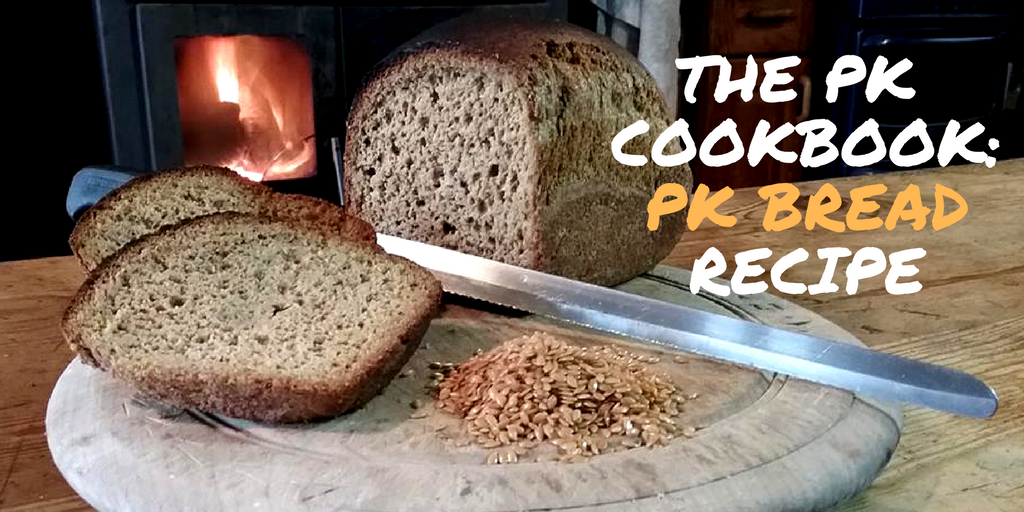
The single biggest reason for lapsing from the PK diet (Paleo-ketogenic) is the absence of bread. To secure the diet for life you must first make PK bread. I have searched and nothing is currently available commercially which passes muster. Loaves will become available as demand builds, but in the meantime you have to make your own bread. If you do not have the energy to do this yourself but have any friends or family offering to help you, then top of the list must be, ‘Please make my daily bread’. PK bread consists of just linseed, sunshine salt (see Chapter 13, page 93) and water.  Americans, and others, may be more familiar with linseed being referred to as flax or flaxseed or common flax. There is technically a subtle difference – flax is grown as a fibre plant that is used for linen.  Linseed is grown for its seed. The flax plant is taller than linseed and is ‘pulled’ by hand, or nowadays by machine.

How to make a PK bread loaf in five minutes

Please forgive the tiresome detail, but you must succeed with your first loaf because then you will be encouraged to carry on. I can now put this recipe together in five minutes (proper minutes that is – not the ‘and this is what I did earlier’ TV version). I have spent the last six months making a loaf almost every morning – there have been many revisions and the version below is the current recipe which I think is perfect!

Equipment needed:

  • Cooking oven that gets to at least 220 degrees Centigrade
  • Weighing scales
  • Nutribullet (or similarly effective grinding machine – do not attempt to do this with a pestle and mortar; I know – I have tried and failed)
  • Mixing bowl
  • A 500 gram (or one pound in weight) loaf baking tin
  • Measuring jug
  • Cup in which to weigh the linseed
  • Wooden spoon
  • Wire rack for cooling
  • Paper towels

Ingredients needed:

  • 250 grams of whole linseed (use dark or golden linseed grains)
  • One teaspoon of sunshine salt (can be purchased from www.sales@drmyhill.co.uk) or unrefined sea salt
  • Dollop of coconut oil or lard
Actions Notes
Take 250 grams of whole linseed You could purchase linseed in 250 gram packs and that saves weighing it. Use dark or golden linseed grains – the golden grains produce a brown loaf, the dark a black one.Do not use commercially ground linseed – the grinding is not fine enough, also it will have absorbed some water already and this stops it sticking together in the recipe.If you purchase linseed in bulk then you must weigh it really accurately in order to get the proportion of water spot on.
No raising agent is required.
Pour half the linseed into the Nutribullet/grinder together with one rounded teaspoon of PK ‘Sunshine’ salt (see page 93).
Grind into a fine flour.
Use the flat blade to get the finest flour.Grind until the machine starts to groan and sweat with the effort! You need a really fine flour to make a good loaf. This takes about 30 seconds.The finer you can grind the flour the better it sticks together and the better the loaf.I do this in two batches of 125 grams or the blades ‘hollow out’ the mix so that half does not circulate and grind fully.
Pour the ground flour into a mixing bowl.
Repeat the above with the second half of the seeds and add to the mixing bowl. Whilst this is grinding, measure the water you need.
Add in exactly 270 ml water (not a typo – 270 it is). Chuck it all in at once; do not dribble it in.Stir it with a wooden spoon and keep stirring. It will thicken over the course of 30 seconds.Keep stirring until it becomes sticky and holds together in a lump. The amount of water is critical. When it comes to cooking, I am a natural chucker in of ingredients and hope for the best. But in this case, you must measure.Initially it will look as if you have added far too much water, but keep stirring.
Use your fingers to scoop up a dollop of coconut oil or lard. Use this to grease the baking tin. Your hands will be covered in fat which means you can pick up your sticky dough without it sticking to your hands
Use your hands to shape the dough until it has a smooth surface.
Drop it into the greased baking tin
Spend about 30 seconds doing this. Do not be tempted to knead or fold the loaf or you introduce layers of fat which stop it sticking to itself. This helps prevent the loaf cracking as it rises and cooks (although I have to say it does not matter two hoots if it does. It just looks more professional if it does not!)
Let the loaf ‘rest’ for a few minutes …so it fully absorbs all the water and becomes an integral whole. This is not critical but allows enough time to…
…rub any excess fat into your skin, where it will be absorbed There is no need to wash your hands after doing this – the basis for most hand creams is coconut oil or lard. (Yes, lard. It amuses me that rendered animal fat is a major export from our local knacker man to the cosmetic industry.)
Put the loaf into the hot oven – at least 220°C (430°F) – for 60 minutes Set a timer or you will forget – I always do!I do not think the temperature is too critical – but it must be hot enough to turn the water in the loaf into steam because this is what raises it. I cook on a wood-fired stove and the oven temperature is tricky to be precise with. That does not seem to matter so long as it is really hot. Indeed, I like the flavour of a slightly scorched crust.
Wipe out the mixing bowl with a paper towel. This cleaning method is quick and easy. The slightly greasy surface which remains will be ideal for the next loaf. The point here is that fat cannot be fermented by bacteria or yeast and does not need washing off mixing and cooking utensils. My frying pan has not been washed for over 60 years. I know this because my mother never washed it either.
When the timer goes off, take the loaf out of the oven, tip it out and allow it to cool on a wire rack.
Once cool keep it in a plastic bag in the fridge.
It lasts a week kept like this and freezes well too.It is best used sliced thinly with a narrow-bladed serrated knife.

Fry your freshly made PK bread in coconut oil or lard and add the following for a delicious PK breakfast;

  • 2-3 boiled eggs
  • Smoked fish, tinned fish, tinned cod’s roe
  • Paté or rillette
  • Nut butter
  • Vegan cheese (check the carb content of this) and tomato
  • Coyo yoghurt

This blog was taken from Sarah Myhill and Craig Robinson’s new book The PK Cookbook

Posted on

How to cope with IBD at work

How to cope with IBD at work

Sometimes it seems that living with IBD is a full-time job (albeit one with zero pay or benefits!). Time spent at the hospital, recovering from flares and trying to live a healthy life can all add up. Unfortunately, most of us are not millionaires and work is a necessity, and for lots of us a fulfilling part of our lives. Working with IBD isn’t always easy but for the vast majority of us it is possible. However, you may need to talk to your employer and have adaptions made.


Be honest

It is very important that you are honest with your employer about your condition and what it involves. IBD, like any chronic illness, is covered under the 2010 Equality Act since it is a physical and long-term impairment (definition of disability under the Equality Act 2010, 2015). This means employers must make necessary adaptions to help you in your role. This could include flexible working hours, access to a disabled toilet or a fridge to store your medicine in. Most employers are accommodating if you talk to them and explain what your condition actually entails (and if this is disclosed at interview, employers cannot discriminate against you in the recruitment process).


Be realistic

Many people with inflammatory bowel disease have really high expectations of themselves, which is also reflected in their careers. However, it is important to reflect on your career path and whether it is adaptable to life with IBD. Does it involve lots of travel? Is it stressful? Are you often on the go? Having IBD doesn’t mean giving up on your career dreams but just making sure the job is right for you.


Be informed

Reading the paperwork and the terms and conditions that comes with a job is more important than ever with IBD. Here are some things you need to find out:

  • What is the sick pay entitlement?
  • What is the policy for long-term periods of sickness?
  • How flexible are the working hours?
  • If you are working abroad, is medical insurance included and does this include pre-existing conditions?
  • Will you get regular breaks? (This can be easy for office workers; not so easy for those in retail.)
  • Is there the possibility of reduced hours or going part-time further down the line?

Keep records

It may be worth having a notebook to keep a list of any time you have had to take off work for IBD and the corresponding symptoms and hospital trips.


My experience of working with IBD

I am a teacher by trade and have taught both in the UK and abroad. In every job, I’ve been honest about my conditions from day one and luckily all my employers have been great. When I was on infliximab, my employers were great at giving me time off to go to hospital appointments and in my previous role I had surgery and the school arranged for me to come back on a phased return. It can be really hard teaching with IBD – I have had days where I felt like I wanted to faint in front of a class – but luckily most of the time I’m fine. In some ways doing a demanding job means I often forget about my symptoms, but I have had to dash out of class on a few occasions. I think this is why talking with colleagues about your condition is so important – it has meant they have been able to quickly step in if needed. Yet over the years, I think I’ve also become more realistic about my teaching career and this year I’ve reduced my workload to three days a week, aiming to spend more time on my health and my writing. I don’t see this as a step down but a necessary adaption to help me live as balanced a life as possible; hopefully I can combine the security of a teaching job with my other passions in life – writing and nutrition.

This blog is taken from Managing IBD: A balanced guide to inflammatory bowel disease by Jenna Farmer.

Posted on

Back Pain: Myths and Misconceptions

Chapter 4

Myths and Misconceptions

Back pain, as the statistics demonstrate, is extremely common. In the same way that everybody has a view and advice to give on the best way to cope with and eliminate the symptoms of a head cold, personal experiences of back pain also bring forth theories and guidance without necessarily the professional knowledge to support it. From this inevitably grow myths and misconceptions which, although given with good intention, give rise to a great deal of conflicting information and confusion.
There is also much evidence to suggest that the way in which we overwork our spines and the connecting muscles can do us a great deal of harm. Add this to the many misunderstandings about back care and we not only inhibit our ability to recover speedily from injury, but can also subject ourselves to unnecessary weakening of our back muscles. How to assess the risk involved in a manual task and carry it out safely is more fully discussed in Chapter 8; here I will tackle the most common misunderstandings about what is good and bad for backs.

‘Put your back into it’

Seldom do the sayings and proverbs of past generations convey anything but good sound advice but one such phrase, ‘Put your back into it’, can certainly be misinterpreted. This saying might suggest that increasing physical effort by using enormous force to push, pull or lift something, will help the desired task to be better achieved. It is more likely, however, to have the opposite effect and even give you an injury. Its inference, that the spine is always the strongest part of the body, sometimes leads us to undertake physical effort far beyond our safe capability.

The following commonly believed myths and misconceptions lead many of us to take the wrong sort of action. This is usually at a time when we most need to follow the best possible advice.

‘You should sleep on a hard mattress’

How often have we been enticed to purchase an extra firm ‘orthopaedic’ mattress, believing it to be good for our backs? A mattress that is too hard and does not yield slightly to the contours of our spine can put considerable strain on that small area in the lower lumber region which is left with no base on which to rest. The back muscles, when they should be completely relaxed, are therefore given the work of supporting the weight of the lower organs of the body throughout the night. This can result in stiffness and pain in the mornings. A slightly gentler mattress, therefore, will not only provide consistent support along the length of the natural curvature of the spine, but will aid more restful sleep.

It is important when buying a mattress to take plenty of time to try it out for comfort before making your choice. Lie on the bed. All good stores provide shoe protection on their display beds. Mattresses should be neither too hard nor too soft. Slide a hand under the small of your back and feel if there is a gap. Lie on your side or in the position which you normally find most comfortable at night to establish whether the whole line of your body is straight and will be adequately supported during the hours of rest and sleep. A mattress which sags is equally bad for you. Spending many hours curved like the shape of a slice of melon will mean that you will not only start the next day with a stiff, aching back but with lethargy as well from insufficient quality sleep.
It is a very good idea to try a range of beds from different manufacturers before making your choice. A bed should be one of our most important purchases, especially as we spend almost one third of our lives in bed, so don’t be afraid to be fussy. You will be spending many hours of every day either appreciating or regretting your eventual choice.

‘I hurt my back because I got tired’

One fact which often causes surprise is the time of day when you are most likely to strain your back. It is not always in the late evening when you are tired, but more likely to be in the early morning before the muscles have had time to warm up. The pain, however, may not be felt until later in the day or even when you eventually sit down to rest. Unfortunately, before embarking on household tasks or ‘DIY’ jobs, we seldom consider that we should ‘warm up’ our muscles like a sportsman. It may seem a little extreme to be stretching and carrying out a few exercises before hanging wallpaper or digging the garden, but it can be the difference between a successful day and one which results in misery.

‘I’ve put my back out’

Another misconception is that a sudden, severe onset of back pain is always as the result of a ‘slipped disc’. Intervertebral discs do not just carelessly slip out of position and in fact less than 5% of all back pain suffered is the result of a disc becoming displaced or squeezed between the bones of the spine. The vast majority of back pain is caused by the distressing spasm resulting from over-stretched muscles.

However, if the symptoms appear more serious than just muscle spasm with generalised aching, and involve leg pain, severe immobility or numbness/pins and needles down the legs, then the possibility of a prolapsed disc should be considered. This should be examined by a medical practitioner as the situation requires accurate diagnosis before embarking on any programme of rehabilitation. Very occasionally, as the result of severe trauma such as a fall or sporting injury, a fracture dislocation is possible, but this is a matter requiring urgent medical attention.

‘I need to lie on the floor for six weeks’

At one time, when back pain struck, it was common practice to lie on the floor for perhaps up to six weeks, or to go to bed and stay there until the pain subsided. Although initially rest and analgesics (pain-killers) for a day or two will help to relax the injured muscles and relieve spasm, prolonged bed rest has now been proven to worsen the pain and delay recovery. Walking and gentle exercise should be resumed as soon as they can be tolerated. If the spasm is so bad that walking is too painful, frequent stretching and rotation of your ankles will help to stimulate the circulation to your legs and lower part of your body.
‘I’m too young to get back ache’

A popular misconception held by young and fit individuals is that they cannot harm their backs because they are supple and their muscles well-developed. Although youth and fitness are of enormous benefit, nobody can be said to be exempt from a back injury. A single movement repetitively carried out, such as stooping to polish a car, or maintaining an awkward position, for example, sitting slumped in a chair, can bring about the first signs of weakness.

Contrary to common belief, back pain is not infrequent in 30-50 year olds. This is often a time when poor posture and inappropriate lifting techniques which have persisted during the earlier years eventually reveal a physical weakness in the back muscles. Good practice learned in childhood is the best protection against harm. In later years, although natural degenerative processes are responsible for a slight shortening of the spine, reduced muscle tone and decreased bone strength and thickness, elderly people are less likely to over-estimate their ability to move or lift a heavy item. Young men in particular are often reluctant to ask for assistance with a heavy load, perhaps fearing that to do so may appear weak in the presence of their peers.

‘I hurt my back once, so I know it is weak’

Back problems developed in youth or middle age do not have to be an indication that it is the start of a slippery downhill slide into a world of disability, walking sticks or wheelchairs. Strengthening exercises, improved posture and more accurately assessing the tasks to be carried out, will help to prevent recurrence.

‘If I ignore it, it will go away’

Back pain is not something in your imagination or which can easily be ‘worked off’ by persevering with a strenuous physical task. All pain is real and a symptom that something is wrong. By ignoring the pain and continuing with the activity in the hope that eventually it will go away, will more likely exacerbate the problem and delay healing of the strained tissues.

‘An operation is the only answer’

Unfortunately there is no ‘quick fix’ for back pain. Surgery to the back does not guarantee to cure all types of back pain in the long term. Statistics show that up to 30% of patients may suffer in some way from the effects of the surgery or may not even gain adequate relief from their original backache. Your orthopaedic surgeon will discuss both the need and implications of any kind of invasive procedure to make sure that you fully understand the anticipated outcome of such surgery. He will also want to be sure that all other more conservative treatments have been thoroughly explored first.

‘You can see that I am in pain’

There are very few signs, if any, to the casual observer that someone is suffering from constant, nagging back pain. Recovering from back pain can take anything from a few days to several weeks. This sometimes means that sympathy and patience can wear a little thin, even drawing accusations of laziness or being ‘workshy’. Back pain is not, however, a problem that you have to live with. There are many solutions, appropriate to individual circumstances, including both orthodox medical treatments and alternative therapies, which can be very helpful.

Positive conclusion

Back pain that is not actively challenged is unlikely to be a ‘once-in-a-lifetime’ event. It is important to keep that in mind – it is not a myth! However, when life is back to normal and full mobility restored, the whole event and its accompanying misery may be quickly forgotten. Do not drop your guard – it is a recognised fact that following one episode of back pain, you are three to four times more likely to suffer its wrath again. Therefore, as soon as full mobility has been restored is the time to make the conscious decision to improve your everyday posture and lifting techniques. This makes muscle-strengthening exercises (see chapter 12) all the more important to prevent that recurrence. First, however, we will look at the causes of back pain.

This blog is taken from ‘The Smart Guide to Back Care’ by Janet Wakley.

Posted on

Nutritional approaches to CFS

Food choice and quality

The value of choosing, where possible, locally grown or produced food has been much reviewed and generally agreed upon in recent years. We all have access to news items, television programmes, magazine articles and, for many of us, internet information on this subject. The value and availability of local, seasonal produce have been discussed at length. Many authors in Europe and America have written controversial books covering such subjects as poor food quality, food commercialisation, food additives, pressure advertising and many other contentious topics. A selection of my favourite authors includes: Michael Moss, Bee Wilson, John Humphreys, Ben Goldacre, Barry Groves, Stanley Feldman with Vincent Marks, and Eric Schlosser.

Meanwhile our chefs and celebrity cooks have made us more aware of our poor-quality school meals (Jamie Oliver), the use of country produce (Hugh Fearnley-Whittingstall), or simply good quality food and healthy cooking methods (Gary Rhodes, Nigel Slater, Simon Hopkinson etc). Having scanned today’s main TV channels (Free-Sat) today being a typical quiet Thursday in March, I have identified 13 programmes whose subject matter is cooking or food. This does not include the radio programmes.

With such unrelenting advice on food selection, preparation and cooking it is difficult to believe that an unhealthy diet is possible in the UK. Although media and governmental advice on ‘healthy’ eating can be conflicting, we are all aware that refined, processed and generally harmful ‘junk food’ is best avoided. At the same time, I frequently encounter patients who admit that their diets are dreadful; their excuses range from lack of time to dislike of cooking or shopping, or simply a result of craving all the wrong foods.
Regrettably, a major motivation for many people’s food selection is a result of economic necessity. Such items as convenience foods, TV snacks, cakes, biscuits, crisps, chocolate, cola-drinks and alcohol feature as essential components in many weekly housekeeping bills. Quality proteins, in particular beef and fish, are beyond the household budgets of many families. The failure of many schools to give basic education in cookery is also very much to blame. It would be so easy for all teenagers (both sexes) to have basic cookery skills taught to them whilst at school, to form a basis upon which to draw in their adult life. It is common knowledge that many school children do not know where milk, eggs and common vegetables (potatoes, tomatoes etc) have come from, or how they are grown.

I have already outlined my opposition to high-carbohydrate diets and criticised the ‘healthy eating’ maxim that advocates five portions of fruit and vegetables daily. Such disorders as syndrome X, diabetes, obesity and a huge range of health problems can result from such diets. I have emphasised the value of eating proteins at each meal and also animal fats as part of a recommended diet. There is only one advantage to a high-carbohydrate diet: it is inexpensive. A diet rich in cereal foods and root vegetables has been defined as ‘peasant food’. Protein foods have for centuries been the preferred food of the middle and upper classes. One only has to look at the favoured food of different countries and cultures to identify this class bias. Obvious examples of ‘people’s foods’ are rice in China, cereals and pulses in India, pasta in the Mediterranean area, wheat in Europe and America and potatoes in Ireland. Carbohydrates are cheap, filling, tasty and usually easy to prepare.

This has made the current official recommendation for the diet to consist of 50–70% carbohydrates all the easier for people to adopt. However, it is seen by many as a major cause of the obesity, diabetes and heart disease epidemics that afflict the so-called civilised nations. Perhaps CFS should be added to the above list; certainly the prevalence of chronic fatigue, with the often related symptom of depression, is increasing each year.

The treatment of many health problems requires nutritional intervention and advice. Problems that are directly food related include gastro-intestinal complaints, leaky gut, candidiasis and food allergies, but systemic general health problems may also benefit from this approach.

Food digestion

Having reviewed the relative value of fresh, locally produced food versus processed ‘junk’ food, the next topic must be the part digestion plays in the breakdown of our health.
I want to start by considering several, generally held misconceptions concerning our digestion:

1. It doesn’t matter what we eat, as rubbish is eliminated and all the nutrients are absorbed.

2. The typical symptoms of indigestion – such as stomach fullness and wind, diarrhoea and/or constipation, heartburn and nausea – are all transient symptoms resulting from hurried meals or stress and are not serious health disorders.

3. The symptoms of indigestion can usually be solved by ant-acids, Immodium, paracetamol and other self-prescribed medicines. Advice or treatment is rarely necessary.

These misconceptions may be reassuring, but they prevent us from seeing what the problems really are. Digestive disorders, as with many ailments, do not always present matching symptoms. Achlorydria (lack of stomach acid), reduced pancreatic enzyme status, leaky gut, and low short-chain fatty acid levels do not present predictable diagnosable symptoms. To put it simply, a lot can go wrong before you are aware of the problem. This can result in a situation where quite serious gut problems can develop over several years before real action is taken to accurately diagnose and effectively treat the condition. I have a patient who had been prescribed ant-acids for eight years, for an acid stomach, before a gastroscopy was requested and a stomach tumour diagnosed. This resulted in surgery to remove one third of his stomach, yet this life-saving emergency surgery was preceded only by occasional heartburn and nausea until a few days before the stomach operation, when he developed severe blood loss and black stools. Not surprisingly, he had no awareness of the potential seriousness of his condition.

The gastro-intestinal tract is vital for energy production for our entire metabolism. The efficiency of every body organ can be compromised by digestive disorders. Naturopathic medicine, or ‘functional medicine’ as it has been termed in America, has promoted many clinical approaches designed to treat gastrointestinal disorders.

A brief review of these diets and treatment methods will serve to emphasise the value of the drug-free systems that have been prescribed to normalise gut function. I do not endorse all of these regimes, but I do agree with the common theme of non-invasive therapies to treat indigestion, without recourse to drug-based symptom relief.

This blog is taken from Why Am I So Exhausted? by Martin Budd.

Posted on

How food influences your mood

How Food Influences Your Mood

Learning to feel differently about food includes recognising the link between nutrition and mental wellbeing. There is no point in achieving a slimmer body if the price is depression and increased anxiety. Scientific researchers suggest people should be cautious in how they reduce their calorie intake while attempting to slim down as research findings show that sudden changes in nutrition, or reducing certain nutrients in a diet, can result in a worsening of depressive symptoms. (Sathyanarayana et al, 2008)

A study in the British Journal of Psychiatry (Akbaraly et al, 2009) also found evidence that eating a wide range of real foods versus processed foods of poor nutritional quality increased the likelihood of depression.

When people abruptly stop eating large amounts of processed foods containing unhealthy fats, and loaded with sugar, they can often experience withdrawal symptoms similar to those of going “cold turkey” from drugs. The withdrawal symptoms can last for several days and for some people the symptoms of headache, muscle pain and feeling below par can be powerful enough for them to return to their old eating habits just to make them feel “normal” again. Stick with the process, though, as the rewards will far outweigh any temporary discomfort.

Other nutritional deficiencies have a part to play in feeling low or even depressed. These include deficiencies in zinc, omega-3 fats, B vitamins, B6 and B12 especially, and vitamin D.

Missing meals can cause a dip in blood sugar levels, resulting in the release of adrenaline which increases feelings of anxiety and can even be a trigger for raised levels of anxiety generally.

Disordered eating often involves binge eating. This causes physical discomfort but can also often be a trigger for feelings of despair and shame. If overeating happens late at night, the inevitable bloating can interfere with the ability to sleep, again lowering mood.

Following a restrictive diet where carbohydrates are eliminated has an impact on serotonin levels in the brain that can lead to feelings of depression. We encourage eating a balance of complex, unrefined starchy carbohydrates such as vegetables and protein and healthy fats to maintain a positive mood, and promote satiety.

Making changes towards healthier food choices is obviously beneficial on many different levels. The changeover can happen during a radical period when mass changes are made, or one meal at a time, gradually reducing the amount of processed sugars and high fat foods that are eaten. How this is tackled is down to personal choice, and what best suits each individual.

In essence, a healthy diet will not cause ecstatic happiness but a poor diet could be a contributing factor to feeling low, so it’s important for mental wellbeing to eat a wide variety of real foods.

This blog is taken from How to Feel Differently About Food by Sally Baker and Liz Hogon. You can read the first chapter here!

Posted on

So, what is the Paleo diet?

What is the paleo diet

First, it is important to state there is no such thing as ‘the Paleo diet’ per se. Pre-agricultural diets were regionally variable and seasonally cyclical. In colder climates, they tended to be meat-based as the land was either under snow for much of the year or of poor quality and only suited to grazing. In warmer regions fewer red meats were eaten and fruits and plants dominated. Although the ancestral diet may have varied in content, it was more nutrient dense than that of today. So, although no standardised Paleo diet exists, the Paleo diet is usually defined by what it excludes, and is generally accepted as being, legume and dairy free.

It is thought that the advent of agriculture around 10,000 years ago marked the demise of the nomadic way of life, giving way to the cultivation of grains and legumes and the domestication of animals for milk. Archaeological remains suggest an abrupt decline in health at this time. Loss of stature, arthritis and other diseases associated with poor mineralisation seem to coincide with the introduction of grains into the diet. Ten thousand years might seem like a long time to those of us who hope to live to around 80 but is, in fact, the evolutionary equivalent of the ‘blink of an eye’, and would not have given us enough time to adapt.

However, there is archaeological evidence that some hunter-gatherers were eating grains much earlier than this. It seems the closer to the equator, the greater the intake of plant-based foods, which in some cases may have included wild grains. This may explain why gluten (and dairy) intolerance is more prevalent in colder latitudes, and why those with Scandinavian or north European ancestry are poorly suited to a vegetarian diet. What the hunter gatherer diet seemed to have in common was that they were highly nutritious and all contained meat or fish. They provided good levels of minerals, saturated fat and fat-soluble vitamins, with little or no grain or dairy and variable amounts of protein, most of which was derived from meat.

Much of the diet was raw which further increased the nutrient density and provided good levels of fibre. I suspect that rather than being historically accurate, the modern assumption that the Paleo diet was a high protein diet results from the misplaced fat and carb phobia diet that is still influencing nutritional thinking today. In fact, the food group most highly prized in the ancestral diet was saturated fat. Carbs have been given a bad press because they are nearly always derived from grains, a food group that causes problems in a number of people.

However, carbs from vegetables and fruits are much easier for the body to handle. A diet high in raw vegetables and salads does not have the same effect as a diet high in cereals, although both are high in carbohydrate. Whilst it may seem impossible to imagine a diet without grains, they are easily replaced by alternatives such as vegetable pastas, and coconut, seed and nut flours in baking and break making. Nuts can be fermented into cheeses, coconut cream into yoghurt and soft cheese, and the milk from nuts and coconuts can be made into delicious desserts and ice-creams, making Paleo eating varied and enjoyable.

What is also known about the Paleo diet is that it contained virtually no sugar. Refining has enabled us to concentrate sugars in quantities that our bodies are ill equipped to handle. For example, a soft drink contains the equivalent of eight and a half feet of sugar cane – an impossible quantity to get through in its unrefined state. The high proportion of carbohydrates in the modern diet compounds our inbuilt predilection for sweet foods.

Until technology got involved in food production, foods that were bitter were generally poisonous and those that were sweet were usually safe to eat, but that doesn’t apply today since many foods are laced with sugar, high-fructose corn syrup and artificial sweeteners – and they definitely aren’t safe to eat. Our first food, breast milk, contains a sugar called lactose and thus the early association between feeding and being loved is established before we are capable of conscious thought. Eating is associated with emotion, and this is one of the reasons sweet foods can be comforting, and why we can feel deprived and miserable when trying to give them up.

Despite their pervasive presence at nearly every meal today, in Europe and America grains were only elevated from animal fodder to dietary staple at the time of the industrial revolution, cultivating in us a taste for stodgy, high-carbohydrate foods, which has been a contributory factor to the obesity epidemic. The Arabic nations seem to have been eating grains the longest, and their wheat sensitivity and carbohydrate intolerance are rare. The rapid increase in degenerative disease that has characterised the last 100 years demonstrates that most of us have struggled to adapt. It is estimated that 80 per cent of cancers are related in some way to diet, and it is probably evident to you that much of the food we eat today could not be described as healthy.

In fact, much of it wouldn’t be recognised by even our recent ancestors. Not only are the foods themselves different – the result of selective cultivation or the products of technology – but the ratios of fat, protein and carbohydrate have been reversed. Fat phobia flourishes, and grains – previously dismissed as mostly animal feed, as I have said – now form the foundation of almost everything we eat. In addition, some of what passes for food isn’t food at all but a concoction of chemicals, conceived in the laboratory rather than grown on the land. Modern grass eaters, particularly cows, may not have had access to grass, and non-organic crops will have been forced to grow in demineralised soils, which is why today’s produce contains an average of 80 per cent less nutrients than it did only 50 years ago.

This blog is taken from Go Paleo – Feeding the Urban Caveman by Eve Gilmore. You can read the first chapter here!